
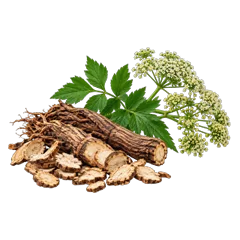
A genus of plants in the carrot family whose rhizomes are used in Chinese medicine for blood circulation and pain, and in North American tradition for breathing and cough.
What is this plant
Ligusticum is a genus of perennial plants in the carrot family (Apiaceae), the family of carrots and celery. The two best known species in herbal medicine are:
- Ligusticum chuanxiong (chuanxiong): a plant native to Sichuan province in China, listed in the Chinese Pharmacopoeia and the US Pharmacopeia.
- Ligusticum porteri (osha): a plant that grows at high elevations in the southwestern US and the Rocky Mountains.
Parts used
In both species the rhizome or root is used. More than a hundred compounds have been identified in chuanxiong, including ligustilide, tetramethylpyrazine and ferulic acid.
Traditional use
In traditional Chinese medicine, chuanxiong is considered a "warm and pungent" herb that promotes blood circulation and the movement of qi, disperses "wind cold" and relieves pain. It has been used for bruises and swelling, irregular menstruation, stroke and angina, alone or in classical formulas. Osha was used by Native American tribes and Hispanic populations in North America at the onset of respiratory infections, as an expectorant and cough suppressant, which is why it is also called "Colorado cough root". It was also used as a bitter herb for digestion and appetite.
What the research says
For chuanxiong, most of the evidence comes from laboratory and animal studies, which pointed to anti-inflammatory and antioxidant activity and an effect on blood vessels. There are clinical studies on combined Chinese preparations in heart and brain diseases, but most were published in Chinese, combined with other treatments, and large multicenter trials are needed. For osha, there are no controlled trials that have confirmed the traditional uses, and most of the research has actually been done on a related species (L. wallichii).
Safety and interactions
- The Chinese Pharmacopoeia does not classify chuanxiong as toxic, and no significant organ toxicity has been reported.
- Osha is traditionally avoided in pregnancy because it may stimulate menstruation. Safety has also not been established in breastfeeding and in children.
- Osha has look-alike, highly toxic plants in the carrot family, so a reliable, identified source is important.
- Because of the traditional effect on blood circulation, anyone taking blood thinners should consult a doctor.
Formulas with this plant