
Butternut is a North American tree in the walnut family whose bark has traditionally been used as a gentle laxative and for skin problems.
What is the plant
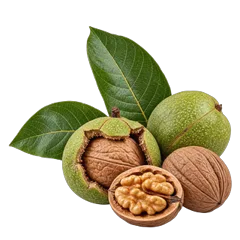
Butternut, known in English as Butternut or White walnut (Juglans cinerea), is a deciduous tree in the walnut family (Juglandaceae). It is native to eastern North America, from New Brunswick and Minnesota to northern Alabama and Arkansas. The tree grows slowly, with light gray bark, pinnate leaves of 11 to 17 leaflets, and lemon-shaped nuts inside a green husk. Today it is classified by the IUCN as endangered, mainly because of a fungal disease that has damaged many populations.
Plant parts used
Mainly the inner bark of the root, and sometimes also the tree bark and leaves. The dried bark is bitter and slightly pungent, and its color changes from yellow to dark brown on exposure to air. In the past the bark was listed in the official US drug compendium (National Formulary).
Traditional use
American Eclectic herbal literature of the 19th century described the bark as a gentle bowel stimulant at low doses and as a "gentle and pleasant" laxative at higher doses, used mainly for chronic constipation and digestive disorders. It was also used for chronic skin conditions such as eczema and pustular rashes, as well as for rheumatism and to support the liver. Modern herbalists describe it as a gentle laxative with possible activity against intestinal parasites.
What the research says
Clinical research on butternut in humans is very limited. Most current studies have examined antimicrobial and antioxidant properties in the laboratory, and some in animals. The laxative effect is attributed to components such as juglone. There is currently no up-to-date regulatory monograph for the plant, and its use is based mainly on historical tradition.
Safety and interactions
- At high doses the bark may cause vomiting and strong diarrhea. Improper use may cause nausea and abdominal cramps.
- Fresh bark is pungent, and contact with the skin may cause redness and even blisters.
- The plant is considered unsafe during pregnancy and breastfeeding.
- People allergic to walnuts may also react to this plant.
- Because of the lack of research, it is advisable to use it only under the guidance of a professional and to tell your doctor about any medications you take.
Formulas with this plant