
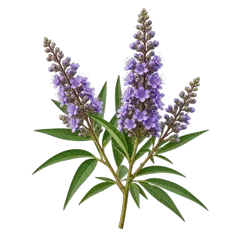
Chaste tree is a Mediterranean shrub whose fruits are traditionally used to balance the menstrual cycle, and a specific extract of it is recognized in Europe for premenstrual syndrome.
What is this plant
Chaste tree (Vitex agnus-castus), also known as chasteberry or monk's pepper, is a shrub or small tree of the mint family (Lamiaceae). It is native to the Mediterranean basin and Central Asia. It grows 1 to 5 meters tall, with fragrant foliage and spikes of lavender-colored flowers that bloom in midsummer.
Parts used
The fruits, dried and ground or as a dry extract. Most studies have been done on the fruit extract.
Traditional use
Its English name reflects an ancient belief that the plant reduces sexual desire, and according to tradition, monks in the Middle Ages used it for this purpose. In herbal tradition it was used for gynecological disorders, hormone-related skin problems and premenstrual symptoms such as breast tenderness and mood swings.
What the research says
- Premenstrual syndrome (PMS): The European Medicines Agency (EMA) has recognized a specific dry extract as a well-established use for treating PMS for three months, based in part on a placebo-controlled study in 178 women. Other preparations are recognized as traditional use only.
- According to NCCIH, low to moderate quality studies point to a possible reduction in symptoms such as breast pain and tenderness, but higher quality studies are needed.
- According to MSKCC, a systematic review found that the evidence for PMS is not definitive due to a lack of well-designed studies, and there may be a benefit for breast pain. In combination with St. John's wort, no effect on menopausal symptoms was found.
- In laboratory studies a dopaminergic effect was found, such as inhibition of prolactin release.
- For fertility, sexual function and menopause, the evidence is limited.
Safety and interactions
- It is generally well tolerated in short-term use. The fruit extract has been tested safely for up to three months.
- Possible side effects: nausea, stomach pain, headache, dizziness, itching, rash, acne and menstrual changes. Allergic reactions have also been reported.
- Avoid during pregnancy and breastfeeding.
- It is not recommended for women with hormone-sensitive conditions, such as breast, uterine or ovarian cancer, without medical consultation.
- Interactions: It may affect medications that act on the dopamine system (Parkinson's medications and antipsychotics) and hormonal preparations such as birth control pills.
Formulas with this plant