A perennial plant of the mint family from North America, used in traditional herbal medicine as a nervine relaxant, to reduce stress and to aid sleep.
What is this plant
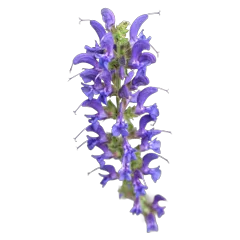
Skullcap, or American skullcap (Scutellaria lateriflora), is a perennial herbaceous plant of the mint family (Lamiaceae). It is native to North America and is widely distributed: from Canada to Florida and west to British Columbia and Oregon. It should be distinguished from a related species, Baikal skullcap (S. baicalensis), whose root is used in Chinese medicine and which has different effects.
Parts used
The dried plant is used, as an infusion, extract or powder. In the clinical study on mood, freeze-dried plant material was used. Skullcap is cultivated and sold as a common ingredient in herbal tea blends.
Traditional use
Skullcap has traditionally been used as a calming herb to improve sleep, to reduce nervousness and tension, and in the past also for other nervous system conditions. It is usually combined with other calming herbs such as valerian, passionflower, hops and lemon balm.
What the research says
The evidence is scarce and of low quality:
- A small, double-blind, placebo-controlled trial in healthy volunteers pointed to a reduction in anxiety.
- A 2014 randomized trial in healthy volunteers found an improvement in mood compared with placebo, but no significant reduction in anxiety.
- A 2024 literature review found four relevant studies, two of them placebo-controlled, that pointed to an anti-anxiety effect without notable side effects. However, the authors judged the studies to be weak or flawed in design, and concluded that there is not yet definitive evidence.
The effect is hypothetically explained by action on the GABA system, the brain's calming system. Further findings on anti-inflammatory and nerve cell protective activity are preliminary.
Safety and interactions
- At high doses, confusion and stupor have been reported. Very prolonged use is generally not recommended.
- Cases of liver damage from skullcap products have been reported, but products are known to have been adulterated with germander, a plant toxic to the liver, which may be the cause. It is therefore important to choose a reliable supplier.
- Safety has not been established in pregnancy, breastfeeding, young children, or severe liver or kidney disease.
- Because of its calming effect, consult a doctor before combining it with sedatives or sleeping medications, and be careful when combining it with alcohol.
Formulas with this plant