Mastic is the fragrant resin of the mastic tree from the Greek island of Chios, recognized in Europe as a traditional herb for mild indigestion and for healing minor wounds.
What is this plant
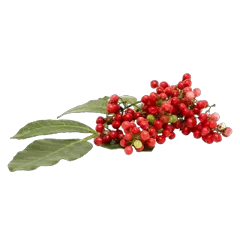
The mastic tree (Pistacia lentiscus) is an evergreen shrub or small tree of the cashew family (Anacardiaceae), common throughout the Mediterranean basin, including in Israeli scrubland. Commercial medicinal mastic is produced from a special variety (var. chia) that grows only in the south of the Greek island of Chios. A tree can live for about a hundred years and yield about 60 to 250 grams of resin a year.
Parts used
The resin. Small cuts are made in the bark of the trunk and branches, and the resin drips out and hardens into translucent whitish or yellowish "tears". The resin is rich in terpenes, phenolic compounds and phytosterols.
Traditional use
Mastic has long been used for chewing, for oral health and for digestive problems. The European Committee on Herbal Medicinal Products (HMPC) recognizes two traditional uses for the resin: relief of mild indigestion (dyspepsia), and treatment of mild skin inflammation and help in healing minor wounds. This recognition is based on long-standing use and not on clinical trials.
What the research says
- Functional dyspepsia: In a randomized placebo-controlled trial with 148 participants, taking 350 mg three times a day led to a significant improvement in symptoms after three weeks.
- Helicobacter pylori: In vitro, mastic harms the bacterium, but in humans the results are mixed: in a small study it eradicated the bacterium in only a minority of patients, and less than standard drug treatment.
The researchers note that the data are limited and larger trials are needed.
Safety and interactions
- No significant side effects were reported in human trials, even at high doses.
- Safety in long-term use has not been well studied, and the maximum safe dose is unknown.
- Cases of allergic contact dermatitis from patches containing mastic have been reported.
- In rat studies, very high doses caused changes in the liver and kidneys.
In summary: Chios mastic is a unique resin with a long tradition and a good safety profile in humans. It is recognized in Europe as a traditional herb for mild indigestion, and at least one controlled trial supports this, but larger studies are needed.