
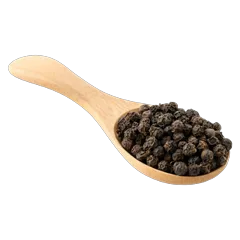
Black pepper is the dried fruit of a tropical vine from India, whose compound piperine is known for its ability to increase the absorption of certain nutrients and medications.
What is this plant
Black pepper (Piper nigrum) is a perennial woody vine of the pepper family (Piperaceae). The wild vine grows in the tropical forests of the Malabar Coast and the Western Ghats range in India. It can reach a height of about 4 meters on trees or poles. The fruit is a small drupe about 5 mm in diameter, which turns dark red when fully ripe.
Parts used
The fruit. Black pepper is produced from unripe fruits that are briefly blanched in hot water and dried for several days, during which the skin shrinks and turns black. The characteristic compound is piperine, which is responsible for the pungency and makes up about 4.6% to 9.7% of the weight of the pepper.
Traditional use
Besides being one of the most common spices in the world, black pepper has historically also been used as a traditional remedy for constipation, insomnia, mouth abscesses, sunburn and toothache.
What the research says
- Increasing bioavailability: A study on human cells and human liver microsomes showed that piperine inhibits the P-glycoprotein pump and the enzyme CYP3A4. Both are involved in breaking down and clearing many compounds in the gut and liver, which is why piperine is used in formulas as an "enhancer" of the absorption of other ingredients.
- Small human studies have reported an increase in blood levels of certain medications following piperine intake, for example carbamazepine. A pharmacokinetic modeling study estimated that at dietary doses the effect is smaller than at supplement doses.
- Other uses, such as an effect on blood sugar or on digestion, rely mainly on laboratory and animal studies.
Safety and interactions
- As a spice in food, black pepper is widely consumed.
- Interactions: Precisely because of its ability to increase absorption, piperine at supplement doses may raise blood levels of medications metabolized through CYP3A4 or transported through P-glycoprotein. People taking regular medications, especially medications with a narrow therapeutic range such as anticonvulsants, should consult a doctor or pharmacist before taking a supplement containing piperine.
Formulas with this plant