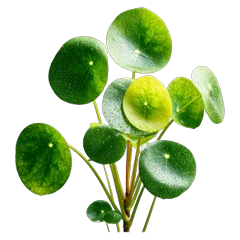
Watercress is an aquatic plant of the mustard family, rich in vitamins K and C and in sulfur compounds, used in folk medicine and studied as a functional food.
What is this plant
Watercress (Nasturtium officinale) is a perennial aquatic plant of the mustard family (Brassicaceae), the cabbage family. It is native to Eurasia. The plant grows quickly, reaching a height of about 60 cm, with hollow stems that float on the water, pinnate leaves and clusters of small white flowers.
Parts used
The aerial parts, mainly the leaves and stems, fresh or as an extract. Watercress is rich in vitamin K, vitamin C and vitamin A, as well as polyphenols. Its main glucosinolate, gluconasturtiin, is converted when chewed or crushed into the compound PEITC (phenethyl isothiocyanate), which has been widely studied.
Traditional use
The plant has a long history of folk use: in ancient Rome for mental illness, by Hildegard of Bingen in the Middle Ages for jaundice and fever, and by Native American tribes for kidney problems and constipation. Today it is eaten mainly as a leafy vegetable in salads.
What the research says
- A 2025 narrative review describes watercress as a promising functional food in the context of chronic diseases. However, the human trials are small (usually 4 to 65 participants), short (4 to 6 weeks) and mainly examined blood markers such as CRP, LDL cholesterol and sugar.
- Most findings on PEITC, including activity against cancer cells, come from laboratory and animal studies.
- In a small study of 19 healthy adults, eating 85 grams of watercress before intense exercise caused a slight initial rise in inflammatory markers, followed by stronger anti-inflammatory regulation during the recovery phase. The researchers noted that the clinical significance has not yet been proven.
In summary, the evidence for a specific health benefit in humans is still limited.
Safety and interactions
- According to the 2025 review, no toxicity or side effects have been documented so far, but drug interactions have not been studied sufficiently. Plants picked in the wild, especially in areas with animal manure, may carry parasites such as liver fluke or giardia, so plants from controlled cultivation are preferable.
- The PEITC in the plant inhibits the enzyme CYP2E1 and may affect the metabolism of certain medications.
- Because of its high vitamin K content, people taking warfarin-type anticoagulants are advised to consult their doctor about regular consumption.
Formulas with this plant