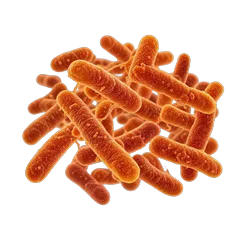
A lactic acid bacterium that naturally inhabits the mouth, gut, vagina and breast milk, and has been studied as a probiotic mainly in laboratory models and preliminary clinical studies.
What it is
Lactobacillus salivarius was first described in 1953, and today it is classified as Ligilactobacillus salivarius. It is a gram-positive, rod-shaped bacterium that does not form spores and produces lactic acid. Its name (salivarius, from saliva) hints at its connection to the mouth, and it is adapted to life in the bodies of vertebrates.
Origin
The bacterium is found naturally in the human oral cavity, digestive tract, vagina and breast milk, as well as in the intestines of birds and other mammals. Probiotic supplements use defined strains isolated from these sources.
Properties studied
In laboratory and animal studies, many strains were found to:
- Resist stomach acid and bile salts, though to a different degree from strain to strain.
- Adhere to intestinal and oral cells.
- Produce bacteriocins, organic acids and hydrogen peroxide that inhibit harmful bacteria, and in some cases also Streptococcus mutans, the bacterium associated with tooth decay.
- Influence the composition of gut bacteria and have antioxidant activity.
What the research says
Most of the evidence comes from laboratory and animal studies, and human studies are few. Among the clinical findings examined: a specific strain given during pregnancy and breastfeeding to prevent mastitis, a strain tested for preventing recurrent ear infections in children, and a strain tested in women with fertility difficulties. A 2017 review notes that in humans the bacterium has also been tested in asthma, atopic dermatitis and bad breath, and to a more limited extent for preventing or treating infections. It is important to remember that the effects are strain dependent, so a finding for one strain does not necessarily apply to another.
Safety
L. salivarius has GRAS status (generally recognized as safe) from the US Food and Drug Administration, and it appears on the lists of species recommended for use in food in Europe and China. However, reviews note a lack of safety studies for some strains intended for clinical use, and that different strains differ in their properties, including antibiotic resistance. People with a weakened immune system or a serious medical condition should consult a doctor before using probiotics.
Formulas with this plant