
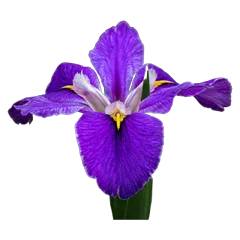
A North American marsh iris whose rhizome has been used in traditional herbal medicine for the skin, liver and digestion, but has hardly been studied in humans.
What is the plant
Blue flag iris (Iris versicolor) is a perennial in the iris family (Iridaceae) that grows in marshes and moist soil in eastern and central North America. It grows up to one meter tall, with sword-like leaves, and each stem bears two to three blue and purple flowers with yellow and white markings at the base of the sepals. It is also grown as an ornamental plant.
Plant parts used
The dried rhizome is used, grayish on the outside and reddish brown inside. Its components include triterpenoids (iridin and iridals), resin, salicylic acid, tannins and a very small amount of essential oil.
Traditional use
Indigenous peoples of North America used it for digestive problems, as a laxative and diuretic, and as a poultice of crushed root on wounds. Eclectic physicians in the 19th century used it for liver and gallbladder problems, thyroid enlargement and to "cleanse" the body. The plant was included in the US Pharmacopeia between 1820 and 1895. Herbalists traditionally use it for skin conditions such as eczema, psoriasis and acne, for constipation and for fluid retention.
What the research says
The plant has hardly been studied scientifically. A monograph from Southern Cross University in Australia states that there are no clinical studies on blue flag iris, and the existing information is based mainly on traditional use. One pharmacological animal study indicated fat mobilization. The proposed uses rest on traditional evidence and the clinical experience of practitioners, not on controlled trials.
Safety and interactions
- At high doses the plant may irritate the digestive system and cause nausea, vomiting and diarrhea.
- The fresh rhizome irritates the mouth and stomach and is suitable for external use only.
- The plant may be confused with other plants, so it is important that its source is identified and reliable.
- Sources are divided on pregnancy and breastfeeding, and in the absence of sufficient research its use is not recommended during pregnancy, breastfeeding or in young children.
- Because the plant has not been studied, it is advisable to use it only in a ready-made formula at a defined dose and in consultation with a practitioner.