Licorice is a legume whose sweet root is used in traditional medicine for digestion and the respiratory tract, and requires caution because of its effect on blood pressure.
What is the plant
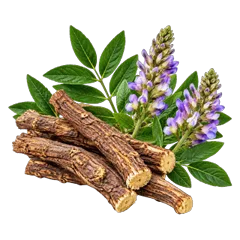
Licorice (Glycyrrhiza glabra) is a perennial in the legume family (Fabaceae). It grows in Western Asia, North Africa and southern Europe and reaches about one meter in height. The plant has pinnate leaves, purple to pale blue flowers and elongated pods, and its roots spread through underground runners.
Plant parts used
The root. Its main component is glycyrrhizin, which is responsible for the sweet taste and makes up about 7% to 10% of the root. There are also "deglycyrrhizinated" preparations (DGL).
Traditional use
Ancient medical systems used licorice for cough, asthma, wound healing and lung and liver diseases. In traditional Chinese medicine it is used to balance other components of a formula, and in Ayurveda as a tonic, expectorant and demulcent. It is also used as a flavoring in food and confectionery.
What the research says
- According to NCCIH, the evidence in humans is limited, and there is no health condition for which licorice has been clearly proven to help.
- Dyspepsia (indigestion): clinical data point to a possible benefit in reducing symptoms, but it is unclear whether licorice alone has an effect on digestive symptoms.
- Mouth ulcers and sore throat: a mouthwash or gargle with licorice may reduce the size and pain of mouth ulcers, and gargling before surgery may reduce sore throat after intubation.
- Preliminary findings relate to a skin gel for eczema. The European Medicines Agency classifies the root under the areas of cough and cold and the digestive system.
Safety and interactions
- Blood pressure and potassium: glycyrrhizin may cause sodium retention and potassium loss, leading to high blood pressure with low potassium. With prolonged use or high doses, serious arrhythmias have been reported. The risk is higher in people with high blood pressure, heart or kidney disease, or high salt intake.
- Interactions: diuretics, cardiac glycoside drugs, corticosteroids and blood pressure lowering drugs.
- Pregnancy: high licorice intake during pregnancy has been linked to preterm birth, so avoid it during pregnancy. Safety during breastfeeding is unknown.
- Deglycyrrhizinated preparations are considered safer, for up to about four months according to NCCIH.
Formulas with this plant