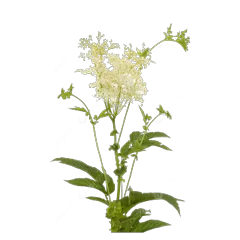
Meadowsweet (Filipendula) is a plant in the rose family rich in salicylate compounds, traditionally used for colds and mild joint pain.
What is the plant
Meadowsweet (Filipendula ulmaria), known in English as Meadowsweet, is a perennial herb in the rose family. It is native to northern, central and eastern Europe and parts of Asia, and grows in moist habitats such as marshes, wet meadows and ditch banks. The plant reaches about one meter in height, has pinnate leaves, and in summer bears dense clusters of small creamy white flowers.
Plant parts used
The flowering aerial parts (the herb) and the flowers are used. The plant contains polyphenols, flavonoids, tannins and salicylate compounds such as salicylaldehyde and methyl salicylate. The European monograph describes preparations such as tea from the comminuted herb, herbal powder and a tincture, taken by mouth.
Traditional use
In folk medicine, meadowsweet was used to treat rheumatism, gout, colds, fever and stomach ulcers. The EMA/HMPC has recognized meadowsweet herb as a traditional herbal medicinal product for supportive treatment of colds and for relief of minor joint pain, for adults only and on the basis of long-standing use.
What the research says
Research on meadowsweet is mainly laboratory and animal research. Antioxidant, anti-inflammatory and antimicrobial activities have been examined, attributed among other things to the phenolic and salicylate compounds. In a study in rats, flower extracts protected the stomach against damage caused by aspirin and alcohol. The salicylate and polyphenol content varies between different plant populations, as shown by a study that examined flowers from seven sites in Poland and Denmark. No controlled clinical trials in humans supporting efficacy were found.
Safety and interactions
- Do not use in case of sensitivity to salicylates (such as aspirin).
- Combined use with salicylates and nonsteroidal anti-inflammatory drugs (NSAIDs) is not recommended without medical advice.
- According to the EMA, use is not recommended under the age of 18 or during pregnancy and breastfeeding.
- For joint pain, the recommended duration of use is up to four weeks. It is not intended for acute arthritis, and in case of a fever above 39 degrees or worsening, see a doctor.
Formulas with this plant