
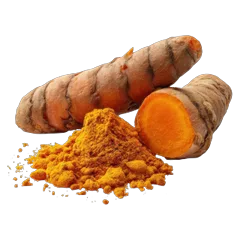
A plant in the ginger family from South Asia whose yellow rhizome is used as a spice and in medical traditions for digestion and the joints.
What is the plant
Turmeric (Curcuma longa) is a plant in the ginger family, a relative of ginger. It is native to South Asia and is now cultivated mainly in India and Southeast Asia and other tropical regions. Its vivid yellow color comes from a group of compounds called curcuminoids, chief among them curcumin.
Plant parts used
The rhizome (the underground stem) is used, fresh or dried and ground. It is used as a spice, a food color, in cosmetics and in dietary supplements, sometimes together with piperine from black pepper, which increases curcumin absorption.
Traditional use
In Ayurvedic, Chinese, Islamic and Thai medicine, turmeric was used for indigestion, colds, skin infections, joint pain and liver disease. The European Medicines Agency (EMA) has recognized it as a traditional herbal medicinal product for relief of mild digestive problems such as a feeling of fullness, slow digestion and gas, in adults only.
What the research says
According to the US National Center for Complementary and Integrative Health (NCCIH), the evidence is inconclusive for any health use:
- Knee osteoarthritis: several meta-analyses have shown positive preliminary results on pain, stiffness and function, but higher-quality evidence is needed.
- Fatty liver: improvement was found in some measures, but not consistently.
- Mouth inflammation following cancer treatments: encouraging preliminary findings.
For other conditions there is not enough evidence. Keep in mind that preparations differ greatly in the amount of curcumin they contain.
Safety and interactions
- Turmeric in usual amounts is probably safe for use of up to two to three months. Possible effects: nausea, heartburn, abdominal discomfort, diarrhea or constipation.
- High-bioavailability curcumin preparations have been linked to cases of liver injury. Stop and see a doctor if fatigue, nausea, dark urine or yellowing appear.
- Turmeric supplements may not be safe during pregnancy.
- According to MSKCC, it may increase the risk of bleeding with blood thinners such as warfarin, and may affect drug metabolism through liver enzymes and some chemotherapy drugs.
- People prone to kidney stones should consult a doctor before using supplements.