
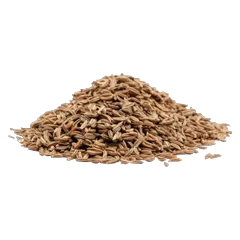
Cumin is a spice plant in the carrot family whose seeds are used in cooking and traditional medicine, and are being studied in relation to blood sugar and lipids.
What is the plant
Cumin (Cuminum cyminum) is a plant in the carrot family (Apiaceae), native to the eastern Mediterranean and South Asia. It is an annual herb 30 to 50 cm tall, with fine, thread-like leaves and small white or pink flowers in umbels. Today India is the world's largest producer. Its dried seeds are one of the most widely used spices in the world. It is important to distinguish it from black seed, which is a completely different plant.
Plant parts used
The seeds are used, as a powder or as an essential oil. The seeds contain more than a hundred chemical compounds, including volatile oils, fatty acids, proteins, vitamins and minerals.
Traditional use
Cumin has been used as a spice for thousands of years: wild seeds were found at the Atlit Yam site from the sixth millennium BCE, and in ancient Egypt it was also used as a preservative. The main component of its essential oil is cuminaldehyde, responsible for its aroma. Beyond culinary use, cumin is used in traditional medicine and is sold today for high blood lipids, obesity and diarrhea. At the same time, the Natural Medicines database notes that there is no good scientific evidence for these uses.
What the research says
An updated systematic review and meta-analysis (2026) included nine controlled trials with 531 participants, lasting 8 to 24 weeks, all conducted in Iran. It found a decrease in fasting blood sugar and triglycerides, an increase in HDL cholesterol and a decrease in waist circumference. However, the variability between the studies was high, and the certainty of the evidence was rated low for sugar and lipids and moderate for waist circumference. Larger and longer studies are needed.
Safety and interactions
- Cumin in food amounts is considered safe. Powder and essential oil in medicinal doses are considered probably safe in the short term.
- Possible side effects: stomach discomfort and allergic reactions.
- Diabetes medications: cumin may lower blood sugar, and there is a concern that it may drop too sharply.
- Anticoagulants and antiplatelet drugs: there may be an increased risk of bleeding. It is advisable to stop about two weeks before surgery.
- During pregnancy and breastfeeding it is advisable to stick to food amounts.
Formulas with this plant