
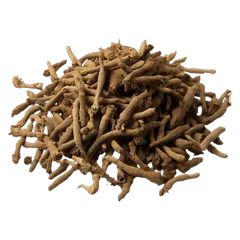
Chinese goldthread (huang lian) is a plant in the buttercup family whose rhizome is rich in berberine and is used in Chinese medicine for infections and diarrhea.
What is the plant
Chinese goldthread (Coptis chinensis) is a plant in the buttercup family (Ranunculaceae), native to China. In traditional Chinese medicine it is known as huang lian (Huanglian). The herbal drug Coptidis Rhizoma is obtained from the rhizomes of three closely related species: C. chinensis, C. deltoidea and C. teeta.
Plant parts used
The rhizome is used, rich in isoquinoline alkaloids, chiefly berberine, alongside palmatine and coptisine. A comprehensive 2019 review identified 128 chemical components in the plant, with the alkaloids being its characteristic constituents.
Traditional use
In China, coptis is traditionally used for conditions such as bacterial dysentery, diabetes, whooping cough, sore throat, mouth ulcers and eczema. Berberine, its main component, is used in Chinese and Ayurvedic medicine for infections, diarrhea and inflammatory conditions.
What the research says
In laboratory and animal studies, coptis extracts and their components showed antibacterial, antiviral, antifungal, antidiabetic and heart-protective activity. As for berberine itself, according to MSKCC, meta-analyses suggest an improvement in the blood lipid profile, but the studies are often of low quality or at high risk of bias, and the diabetes studies are also limited in quality. There are preliminary data in irritable bowel syndrome and fatty liver. The bioavailability of berberine taken by mouth is considered low. Clinical evidence on the whole plant is limited, and the researchers call for further research on efficacy and safety.
Safety and interactions
- According to the 2019 review, berberine is both the main active component and the main toxic component of the plant.
- Possible side effects of berberine: loss of appetite, stomach discomfort, diarrhea, constipation and rash.
- Interactions: berberine affects liver enzymes (CYP2D6, CYP2C9, CYP3A4) and may raise levels of drugs such as tacrolimus and cyclosporine. Consult a doctor before combining it with medications.
- Pregnancy and breastfeeding: do not use. Berberine may worsen jaundice in infants and cause kernicterus, a condition of high bilirubin levels that can damage the brain.
Formulas with this plant