Myrrh is a fragrant resin obtained from Commiphora trees, used since antiquity and recognized in Europe mainly for topical treatment of minor wounds and mouth inflammation.
What is the plant
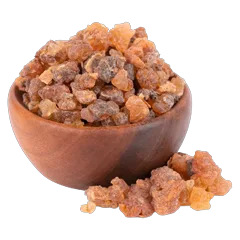
Myrrh is obtained from species of the genus Commiphora, trees and shrubs in the torchwood family (Burseraceae), chief among them Commiphora molmol (also called C. myrrha). From wounds in the tree trunk a gum resin exudes and dries into lumps. Myrrh has been known since antiquity as a material for incense and perfume, and also as a remedy in the traditional medicine of the Middle East, India and China (where it is called Mo Yao).
Plant parts used
The part used is the tree's resin (an oleo-gum-resin). In Europe it is used mainly as an alcoholic tincture intended for application to the skin or the lining of the mouth.
Traditional use
In traditional medicine, myrrh was used for inflammation, stomach problems, asthma and respiratory problems. The European Committee on Herbal Medicinal Products (HMPC) determined, on the basis of long-standing traditional use, that myrrh extract can be used to treat small ulcers and inflammation in the mouth, as well as minor wounds and small boils. This is recognition of traditional use, not proof from clinical trials.
What the research says
According to Memorial Sloan Kettering, human studies are very limited. Laboratory and animal studies point to anti-inflammatory, antibacterial, local anesthetic and stomach-lining protective activity. Herbal formulas that included myrrh showed preliminary benefit in small studies, but it cannot be attributed to myrrh alone.
Safety and interactions
- Skin reactions: allergic reactions, redness, itching and contact dermatitis have been reported. An alcoholic tincture may cause temporary burning in the mouth.
- Warfarin: myrrh may reduce the effect of warfarin. Avoid combining them without medical advice.
- High doses: may affect heart rhythm.
- Pregnancy: a case of acute abdominal pain was reported in a pregnant woman who consumed large amounts of myrrh. During pregnancy, do not use it without consulting a doctor.
- The European preparations are intended for adults and adolescents over 12.
In summary: myrrh is one of the oldest remedies known to humankind. Its modern recognition relates mainly to topical use in the mouth and on the skin, while for other uses human research is limited and the effects have been studied mainly in the laboratory.
Sources
Formulas with this plant