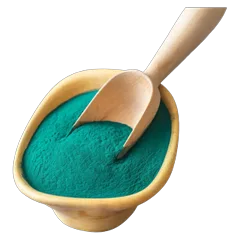
A blue extract derived from the blue-green alga spirulina and rich in phycocyanin, a protein pigment studied in the laboratory for its antioxidant and anti-inflammatory activity.
What is it
Blue spirulina is an extract of the pigment phycocyanin (C-phycocyanin), derived from spirulina (Arthrospira platensis). Spirulina is not a plant in the botanical sense but a cyanobacterium, commonly called "blue-green algae". Whole spirulina contains protein, vitamins and gamma-linolenic acid, while the blue version isolates its blue pigment.
Source
Spirulina is cultivated in alkaline fresh water. The blue extract is produced from it through an aqueous extraction and filtration process. In the United States, the Food and Drug Administration (FDA) approved spirulina extract as a blue food color in 2013, provided it meets limits for heavy metals and is tested for the absence of the toxin microcystin.
Traditional and current use
Spirulina is consumed as a dietary supplement as a source of protein and vitamins, and promoters of the product also attribute to it reduced fatigue, immune support and help with weight loss. Phycocyanin extract is used as a natural food color and as an ingredient in supplements and drinks. It is important to know that the FDA approval of the extract was granted for use as a food color and is based on safety, not on a health benefit.
What the research says
Scientific reviews describe antioxidant and anti-inflammatory activity of phycocyanin in many experimental models, as well as protective effects on the liver and kidneys, but most of the evidence comes from laboratory and animal studies. For whole spirulina, MSKCC notes small human studies in areas such as allergic rhinitis, blood lipids and diabetes, and stresses that spirulina has not been proven to prevent or treat cancer or other serious diseases. There are currently not enough clinical studies on phycocyanin itself to establish a proven health effect.
Safety and interactions
- Blue-green algae products may be contaminated with cyanobacterial toxins (such as microcystins) that damage the liver. It is important to choose a product that has been tested for contaminants.
- Allergic reactions have been reported, including a severe reaction in which phycocyanin itself was identified as the allergen.
- Spirulina may inhibit the enzymes CYP1A2 and CYP2E1 and affect the levels of certain drugs. The clinical significance is unknown, so it is advisable to consult a doctor or pharmacist if you take medications.