
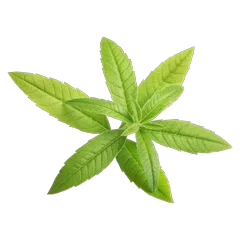
A fragrant shrub with lemon-scented leaves, traditionally used for mild relaxation, to support sleep and to relieve bloating and gas.
What is the plant
Lemon verbena (Aloysia citrodora, also called Lippia citriodora) is a shrub in the verbena family (Verbenaceae). It grows one to three meters tall, with narrow, elongated leaves that give off a strong lemon scent when rubbed, and small white flowers arranged in panicles at the tips of the branches. Today the plant is cultivated in many warm regions of the world, including Europe.
Plant parts used
The dried leaves are used, mainly as an infusion or decoction. The leaves contain an essential oil (including citral, limonene and geraniol) and phenolic compounds, chiefly verbascoside (acteoside) and flavonoids.
Traditional use
In Europe, South America and North Africa, lemon verbena leaves have long been used for diarrhea, gas, insomnia and joint pain, and as a calming infusion that aids digestion. The European Medicines Agency (EMA) has recognized lemon verbena leaves as a traditional herbal medicinal product for two indications: relief of mild symptoms of mental stress and to aid sleep, and treatment of mild digestive complaints such as bloating and gas. This recognition is based on long-standing use, not on clinical trials.
What the research says
According to the EMA assessment report, only one controlled clinical trial has been published: 100 patients with insomnia received a lemon verbena leaf syrup or placebo for four weeks, and the herb group reported improvement in sleep quality and insomnia severity. However, the committee noted significant limitations: subjective measures only, no follow-up and the use of a sugar syrup preparation. The clinical evidence is therefore considered limited, and most of the support comes from traditional use and laboratory studies.
Safety and interactions
- Not recommended during pregnancy and breastfeeding, due to insufficient safety information.
- Do not use in case of sensitivity to the plant or to other plants in the verbena family.
- Use in children has not been studied.
- May cause drowsiness, so take care when driving, especially in combination with alcohol or sedatives.
- In the clinical trial, mild and transient side effects such as restlessness, diarrhea and local itching were reported. No drug interactions were reported.
Sources
Formulas with this plant