
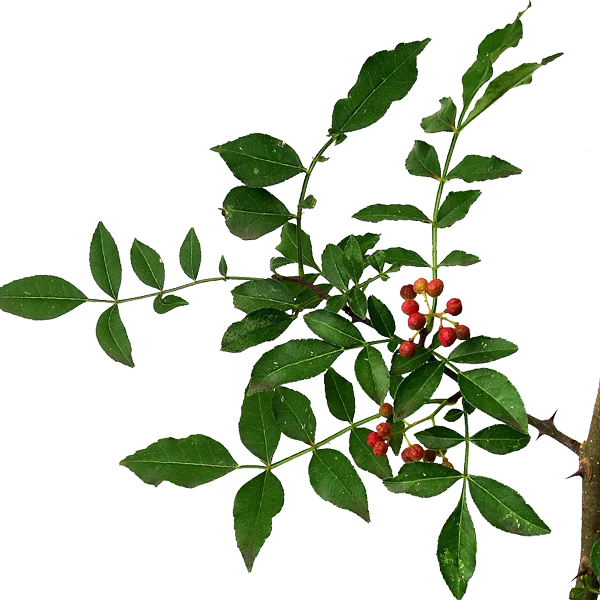
Zanthoxylum (prickly ash) is a genus of trees and shrubs of the rue family whose bark and fruits have traditionally been used for pain, blood circulation and toothache.
What is this plant
Zanthoxylum (also called Fagara) is a genus of spiny trees and shrubs of the rue family (Rutaceae). Species of the genus are widespread around the world, mainly in Asia, the Americas and Africa, and many of them are used as food and spice. In Western herbal medicine, the North American species Z. americanum and Z. clava-herculis are particularly well known, known in English as prickly ash, and both are also called "toothache tree". Z. americanum is an aromatic shrub or small tree that reaches a height of up to about ten meters, with pinnate leaves, yellowish-green flowers and fruits that turn from red to dark blue.
Parts used
The bark and fruits are used. Species of the genus are rich in compounds: more than 500 compounds have been isolated from them, including alkaloids and alkylamides.
Traditional use
Zanthoxylum species are used in many medical traditions for inflammation, pain and blood pressure. Chewing the bark, stems and fruits for toothache is a well-known traditional use, since the pungent juice is credited with a numbing effect. Z. americanum fruits were also used in the past as digestive aids, and a tea made from the fruits was used for sore throat and as a diuretic. Z. clava-herculis is traditionally used for circulation problems and inflammatory conditions, and in Africa various parts of it are used for diseases of the blood and respiratory systems.
What the research says
A comprehensive 2021 review (Molecules) describes antioxidant, pain-relieving and anti-inflammatory activities of extracts and compounds from the genus, as well as effects on obesity, diabetes and the nervous system, but most of them come from laboratory and animal studies, and for some species the active compounds have not yet been identified. The Natural Medicines database notes that there is no good scientific evidence supporting any use of Z. clava-herculis.
Safety and interactions
- There is not enough reliable information on the safety of taking it by mouth.
- Pregnancy: Probably unsafe, because it may stimulate menstruation. During breastfeeding it may cause gas in the baby.
- It may increase stomach acid secretion and reduce the effect of antacid medications.
- Urinary tract symptoms require medical evaluation, and the plant should not be used as a substitute for treatment.
Sources
Formulas with this plant