
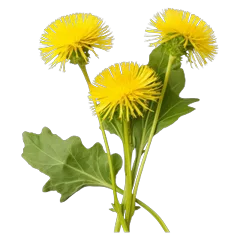
Dandelion is a common wild plant of the daisy family whose root and leaves are traditionally used to support digestion and increase urine flow.
What is this plant
Dandelion (Taraxacum officinale) is a perennial plant of the daisy family, native to Europe, and today it grows in most temperate regions of the Northern Hemisphere. It is a relative of the daisy and bears yellow flowers.
Parts used
The root, leaves and flowers are used. The European Medicines Agency refers mainly to the root together with the aerial parts. The leaves are also used in salads, and the roasted root as a coffee substitute.
Traditional use
Dandelion has been used in traditional medicine in China, Mexico and North America as a diuretic, to promote bile secretion and to stimulate appetite, and in Chinese medicine also to encourage lactation. The EMA/HMPC has recognized it as a traditional herbal medicinal product for the relief of symptoms of mild digestive disorders (a feeling of fullness, gas and slow digestion) and temporary loss of appetite, as well as to increase the amount of urine to flush the urinary tract as supportive treatment in mild urinary complaints, based on long-standing use.
What the research says
According to NCCIH, research on the effects of dandelion on human health is very limited, and there is no compelling scientific evidence for its use in any medical condition. Laboratory and animal studies have examined anti-inflammatory, antioxidant and liver-protective effects, but these results have not yet been demonstrated in humans. Laboratory studies have also shown estrogen-like activity, so caution is needed for people dealing with hormone-sensitive cancer. According to MSKCC, clinical trials are needed to determine when its use is safe and effective.
Safety and interactions
- According to EMA, do not use in case of sensitivity to plants of the daisy family, bile duct obstruction, liver disease, gallstones or active stomach ulcer.
- Avoid in people with kidney failure, diabetes or heart failure due to a possible risk of excess potassium.
- Possible side effects: upper abdominal pain, acidity and allergic reactions.
- There may be interactions with diuretics, diabetes medications, anticoagulants and medications affected by liver enzymes, including immunosuppressants.
- Safety in pregnancy and breastfeeding beyond food amounts has not been established.
Sources
Formulas with this plant