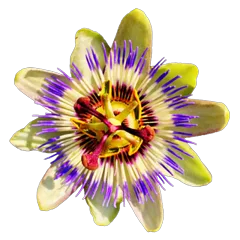
Passionflower is a climbing plant whose aerial parts are traditionally used to relieve mild mental stress and to support sleep.
What is this plant
Passionflower (Passiflora incarnata), also called passiflora or maypop, is a perennial climbing plant of the passionflower family. It is native to the southeastern United States and to Central and South America.
Parts used
According to the European Medicines Agency, the aboveground parts of the plant are used, dried and crushed or as dry and liquid extracts, usually as a tea or as a preparation taken by mouth.
Traditional use
The plant has long been used as a calming herb. Spanish explorers in the 16th century learned about it in South America, and from there it reached Europe and folk medicine. The EMA/HMPC has recognized passionflower as a traditional herbal medicinal product for the relief of mild symptoms of mental stress and to aid sleep, for adults and adolescents over 12, based on long-standing use.
What the research says
According to NCCIH, the plant's effects have not been studied extensively. A small amount of research suggests that taking it by mouth may reduce anxiety, including anxiety before surgical procedures or dental treatment, but the conclusions are not definitive. Small studies suggest an increase in total sleep time. According to MSKCC, a pilot trial found an improvement in generalized anxiety similar to the medication oxazepam, and the proposed mechanism involves an effect on GABA receptors, although it is not fully understood. There is not enough evidence for other uses, such as ADHD, menopausal symptoms or fibromyalgia. Animal studies have examined additional effects, but these findings have not yet been properly tested in humans.
Safety and interactions
- According to NCCIH, tea may be safe for use for up to seven nights, and a daily extract for use for up to eight weeks. Possible side effects: drowsiness, dizziness and confusion. The plant may impair the ability to drive.
- It may increase the effect of sedatives (such as benzodiazepines) and anesthetics; consult a doctor before surgery.
- According to MSKCC, effects on heart rhythm have been reported at high doses, and caution is needed with medications that prolong the QT interval.
- Pregnancy: Do not use, because the plant may cause uterine contractions. Safety during breastfeeding has not been established.