Rhodiola is a plant of cold, mountainous regions whose root has traditionally been used as an adaptogen, and it is recognized in Europe for temporary relief of stress symptoms and fatigue.
What is this plant
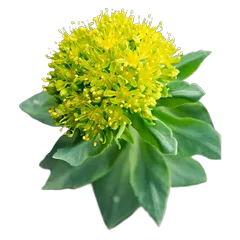
Rhodiola (Rhodiola rosea), also called "golden root", "rose root" or "king's crown", is a succulent perennial plant of the stonecrop family (Crassulaceae). It grows in cold regions and at high altitudes in Europe, Asia and North America. Among the active compounds studied in it, salidroside stands out.
Parts used
The rhizome and roots, usually as a dry extract in capsules or tablets.
Traditional use
In Russia, Scandinavia and other countries in Europe and Asia, rhodiola was used to improve work capacity and endurance, to ease fatigue, to relieve low mood and for altitude sickness. The European Committee on Herbal Medicinal Products (HMPC) recognizes it as a traditional preparation for temporary relief of stress symptoms, such as fatigue and a feeling of weakness, based on long-standing use. According to the European guidance, use is not recommended under age 18.
What the research says
According to NCCIH, there is not enough evidence to determine whether rhodiola is helpful for any health purpose, and most human studies are of low to moderate quality. Memorial Sloan Kettering notes preliminary findings from small studies on physical endurance, mental performance, fatigue, stress, anxiety and mild to moderate depression. In one depression study it was better tolerated than an antidepressant, but was less effective. A systematic review noted that the reporting quality and methodology of the studies need improvement.
Safety and interactions
- Safety: Considered "possibly safe" for use of up to 12 weeks. Possible side effects: dizziness, headache, insomnia and dry mouth or excessive salivation.
- Antidepressants: A case of rapid, irregular heartbeat was reported in a woman who took rhodiola with an antidepressant. Consult a doctor before combining them.
- Other medications: An interaction with losartan (for blood pressure) has been reported. Rhodiola may also affect the metabolism of warfarin and phenytoin.
- Pregnancy and breastfeeding: Very little is known about its safety, so it is best avoided.
In summary: Rhodiola is one of the best known adaptogens, with European recognition as a traditional herb for stress symptoms and fatigue. The clinical findings are encouraging but preliminary, and special attention should be paid to combining it with antidepressants.