
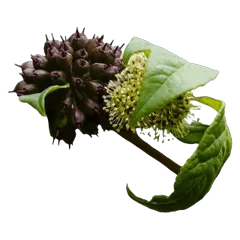
Siberian ginseng is the root of a shrub from northern Asia, traditionally used as an adaptogen and recognized in Europe for relief of fatigue and weakness.
What is the plant
Siberian ginseng, or eleuthero (Eleutherococcus senticosus, formerly Acanthopanax senticosus), is a perennial shrub in the ivy family (Araliaceae), growing mainly in northern Asia. Despite its name, it is not a "true" ginseng of the genus Panax, and it has a different chemical composition. Its main active components are eleutherosides and polysaccharides.
Plant parts used
The root and rhizome, as dried root cut for infusion, powder, liquid or dry extract, capsules and tablets.
Traditional use
The plant has been used in Chinese medicine and in Eastern Europe as an adaptogen, that is, a plant intended to help the body cope with stress, as well as to improve strength and endurance and to support the immune system. The European Committee on Herbal Medicinal Products (HMPC) recognizes the root as a traditional preparation for relief of symptoms of weakness and fatigue, on the basis of long-standing traditional use and not on the basis of clinical trials.
What the research says
According to Memorial Sloan Kettering, human studies are limited. A small study in knee osteoarthritis that tested an herbal blend including Siberian ginseng showed pain relief and improved function, but this cannot be attributed to the plant alone. There are hints of an improvement in the blood lipid profile, and laboratory studies point to protective effects on nerve cells and to blood sugar lowering, but further research is needed.
Safety and interactions
- Digoxin: a case of increased blood digoxin levels was reported, and the plant may also interfere with the level test. Consult a doctor.
- Other medications: in the laboratory, inhibition of liver enzymes (CYP2C9, CYP2E1) that metabolize drugs was found. The clinical significance is unknown.
- Duration of use: according to the European guideline, for adults and adolescents over 12 and for up to two consecutive months. If symptoms persist beyond two weeks, see a doctor.
- Breastfeeding: avoid, as safety is unknown.
In summary: Siberian ginseng is a long-established adaptogenic plant, recognized in Europe as a traditional preparation for fatigue and weakness. Clinical research on it is limited, but it is generally considered to have a good safety profile, provided attention is paid to drug interactions.
Sources
Formulas with this plant