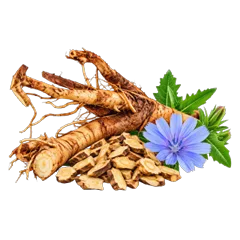
Chicory root, from the daisy family, is rich in inulin, a prebiotic dietary fiber, and has traditionally been used to support digestion and appetite.
What is the plant
Common chicory (Cichorium intybus) is an upright perennial in the daisy family (Asteraceae) that grows to about one meter tall. It has a fleshy taproot up to about 75 cm long, large leaves at the base of the plant and blue flowers. All parts of the plant release a milky sap when broken. The genus is found mainly in Europe and Asia.
Plant parts used
Most of the active components are concentrated in the root, but folk medicine also uses the leaves, flowers and seeds. The roasted root has been used for generations as a coffee substitute. The root is especially rich in inulin, a carbohydrate that can make up to about 40% of the root, with a negligible effect on blood sugar.
Traditional use
Chicory infusions and decoctions have been used in folk medicine for liver problems and jaundice, digestive difficulties, lack of appetite and diabetes. The European monograph recognizes the traditional use of the root for relief of mild digestive symptoms, such as a feeling of fullness, gas and slow digestion, and for temporary loss of appetite.
What the research says
The inulin in the root is a prebiotic fiber, meaning it serves as food for beneficial gut bacteria. As for chicory itself, a comprehensive 2013 review found only a few pilot studies in humans, which are not enough to establish its effectiveness. Most findings on antioxidant effects, liver protection and blood sugar balance come from laboratory and animal studies, so they should be treated with caution.
Safety and interactions
- Chicory is considered relatively safe, but toxicological information is limited. Inulin has GRAS status (generally recognized as safe) with the FDA.
- Allergy: people sensitive to plants in the daisy family (such as ragweed or chamomile) may also react to chicory. Skin and allergic reactions have been reported.
- Pregnancy and breastfeeding: it is advisable to avoid therapeutic amounts.
In summary: chicory root is a rich natural source of inulin, a prebiotic dietary fiber, and has a long tradition as a plant for digestion and appetite. Human research on the plant itself is limited, but it is considered relatively safe for people who are not allergic to plants in the daisy family.
Sources
Formulas with this plant