
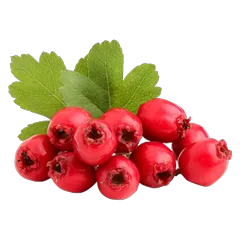
Hawthorn is a shrub in the rose family whose leaves, flowers and fruit are traditionally used to support the heart and blood vessels and have been studied in heart failure.
What is the plant
Hawthorn (Crataegus) is a genus of flowering shrubs and trees in the rose family (Rosaceae), growing in the temperate regions of the Northern Hemisphere, in Europe, Asia, North Africa and North America. The genus includes about 200 species or more. They are shrubs or small trees, usually thorny, with white five-petaled flowers and small berry-like fruits. The main species used medicinally in Europe are Crataegus monogyna and Crataegus oxyacantha.
Plant parts used
The flowers, leaves and fruits (berries). Many preparations combine leaves and flowers together.
Traditional use
In European medicine, hawthorn was used as a heart tonic. In traditional Chinese medicine the fruit (Shan Zha) was used to stimulate digestion and appetite, for cardiovascular conditions and for blood lipids. In folk use it was also taken for circulation, kidney and bladder problems, and applied to the skin for sores, itching and frostbite.
What the research says
- Heart failure: this is the most studied area. A systematic review found that hawthorn added to usual treatment improved physiological measures and symptom control, but two smaller trials found no benefit, and one hinted at an increased risk of early worsening. The results are conflicting. A 2008 Cochrane meta-analysis found a benefit for hawthorn as an add-on treatment in chronic heart failure.
- Blood pressure: the evidence is mixed.
- Other areas: according to NCCIH, there is not enough evidence to determine whether hawthorn helps in coronary heart disease, angina, arrhythmias or anxiety, and there is no evidence to support weight loss.
Safety and interactions
- Generally well tolerated. Reported side effects: dizziness, nausea, vomiting, diarrhea and muscle pain. In overdose, low blood pressure and arrhythmias may occur.
- There are no studies on use beyond 16 weeks.
- Heart medications: there may be an interaction with digoxin and with anticoagulants. Do not use hawthorn instead of drug treatment for heart failure, and use alongside heart medications should be under medical monitoring.
- It is advisable to avoid it during pregnancy. Safety during breastfeeding has not been sufficiently studied.
- The FDA has warned that products sold as "tejocote root" (a Mexican species of hawthorn) were found to be contaminated with toxic yellow oleander, so it is important to buy products from a reliable source.
Sources
Formulas with this plant