Guggul is the resin of a desert shrub from India, used for thousands of years in Ayurveda for the joints, skin and blood lipids, although the research evidence is mixed.
What is the plant
Guggul is obtained from the shrub Commiphora mukul (now commonly known by the scientific name Commiphora wightii), in the torchwood family (Burseraceae), the same family as myrrh and frankincense. It originates in western India and grows in arid and semi-arid climates. It is a shrub or small tree up to about 4 meters tall, with thin, papery bark, thorny branches and red to pink flowers. Because of overharvesting for traditional medicine, it is classified by the IUCN as critically endangered.
Plant parts used
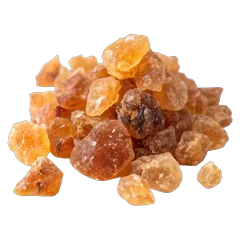
The part used is the gum resin (gum guggulu), collected from the bark by tapping. Its scent is very similar to myrrh. One of the components studied in it is the plant steroid guggulsterone.
Traditional use
In Ayurvedic medicine, guggul has been used for thousands of years, alone or combined with other herbs, for rheumatism and arthritis, skin diseases, hemorrhoids, urinary tract disorders and nervous disorders. It is also used as incense.
What the research says
- Cholesterol: the results are mixed. Some studies showed a benefit, others found no effect, and in some an increase in LDL ("bad cholesterol") was even observed. In a controlled trial published in JAMA in 2003, in 103 adults with high cholesterol, LDL rose by about 4% to 5% in the guggul groups after 8 weeks, compared with a decrease of about 5% in the placebo group.
- Acne and arthritis: there is insufficient evidence for using guggul alone.
- Laboratory studies showed interesting biological activity, but it has not been proven in humans.
Overall, its use is based mainly on Ayurvedic tradition, and the clinical evidence is inconclusive.
Safety and interactions
- Reported side effects: headache, mild nausea, belching, hiccups, loose stools and rash. In the same JAMA trial, six participants who received guggul developed an allergic rash, most of them at the high dose. Contact dermatitis from creams has also been reported, as well as liver injury when guggul was taken in combination with other ingredients.
- Interactions: guggul may affect the CYP3A4 enzyme and reduce the effectiveness of drugs metabolized through it. It is advisable to avoid such a combination without medical advice.
- Information on pregnancy and breastfeeding is limited, so it is advisable to consult a doctor before use.
Sources
Formulas with this plant