A perennial plant from Europe and Asia whose root has been used since ancient Greece and Rome for relaxation and to aid sleep, and is recognized in Europe as a herbal medicinal product.
What is this plant
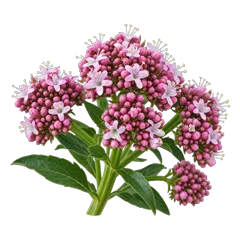
Valerian (Valeriana officinalis) is a perennial plant of the honeysuckle family (Caprifoliaceae), formerly classified in a separate valerian family. It is native to Europe and Asia, and today it also grows in North America. Valerian products have a characteristic, pungent smell.
Parts used
The roots and underground stems are used, dried, as an infusion, tincture or dry extract in capsules.
Traditional use
Valerian has been used since ancient Greece and Rome, and historically it was given for insomnia, migraine, fatigue and stomach cramps. The European Medicines Agency (EMA) recognizes two categories:
- Well-established use: a dry ethanolic extract of the root for the relief of mild nervous tension and sleep disorders, based on clinical studies.
- Traditional use: other root preparations for the relief of mild symptoms of mental stress and to aid sleep.
What the research says
According to NCCIH, the evidence is inconsistent. For sleep the results are mixed, and in some studies valerian did not outperform placebo. The American Academy of Sleep Medicine recommends (2017) against using it for chronic insomnia. Three small studies pointed to possible relief of menopausal symptoms, and for anxiety, depression and PMS there is not enough evidence. MSKCC notes that laboratory studies have found anti-anxiety and nerve cell protective effects.
Safety and interactions
- Short-term use (up to about six weeks) is generally considered safe for adults. The safety of long-term use is unknown.
- Possible effects: headache, stomach discomfort, nausea, morning grogginess, vivid dreams. Stopping suddenly after prolonged use may cause withdrawal symptoms.
- Rare cases of liver damage have been reported, usually in combination with other herbs.
- The EMA does not recommend use during pregnancy, breastfeeding or under age 12, and recommends avoiding driving after taking it.
- Do not combine with alcohol, sedatives or benzodiazepines because of a possible additive effect. There may also be interactions through liver enzymes.
Formulas with this plant