
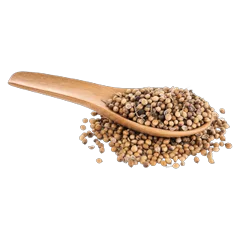
An annual culinary herb in the carrot family whose seeds and leaves are used in cooking and in traditional medicine, mainly for digestion, gas and relaxation.
What is the plant
Coriander (Coriandrum sativum) is an annual herb in the carrot family (Apiaceae). It grows 20 to 70 cm tall, with green, toothed leaves and small white or pink flowers arranged in umbels. It probably originates in the Middle East and the Mediterranean basin, although its exact origin is unclear, and it is one of the most widely used culinary herbs in the world.
Plant parts used
- The fruits (called seeds): the part most commonly used in traditional medicine and research.
- The leaves: used mainly in cooking, and sometimes the whole plant.
The main component of the seed essential oil is linalool, to which researchers attribute part of the plant's antioxidant activity.
Traditional use
In various medical traditions, including traditional Islamic medicine, coriander was used for indigestion, gas, diarrhea and nausea, as a diuretic, to reduce pain and inflammation, and for insomnia and anxiety. In some countries it is also used in folk medicine to balance blood sugar.
What the research says
A 2022 systematic review examined the effects of coriander on the cardiovascular system and included 18 studies, of which only two were in humans:
- In one study, 2 grams a day of seed powder was associated with a decrease in elevated blood pressure and cholesterol.
- In another study in people with type 2 diabetes, 5 grams a day of ground seeds was associated with improvement in blood lipids and oxidative markers.
Most of the findings, such as anti-anxiety, blood sugar lowering and liver-protective effects, come from animal and laboratory studies. The researchers note that coriander can be considered a functional food, but broader clinical trials are needed before a therapeutic effect can be established.
Safety and interactions
Coriander is eaten safely in food amounts around the world, and single-dose and repeated-dose toxicity studies have indicated safety. However, the researchers note that further research is needed on effects on the fetus, so during pregnancy it is advisable to stick to food amounts. If you take medications for diabetes or blood pressure and are considering taking coriander in supplement amounts, it is advisable to consult your doctor.
Formulas with this plant